Oyetola Announces 160% Surge in Marine and Blue Economy Revenue, Links Growth to Reform Agenda
Oyetola Announces 160% Surge in Marine and Blue Economy Revenue, Links Growth to Reform Agenda

Titi Adeleke

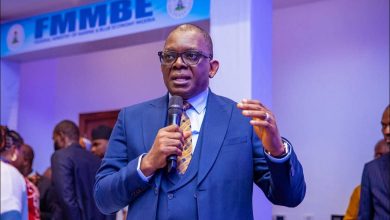
The Minister of Marine and Blue Economy, Dr. Adegboyega Oyetola, announced a remarkable 160 per cent increase in revenue generated by agencies under his Ministry, attributing the surge to sweeping reforms and a renewed focus on accountability.
Speaking on Thursday at the 2026 First Quarter Citizens/Stakeholders’ Engagement, Sectoral Performance Review, and Ministerial Management Retreat in Lagos, Dr. Oyetola said the Ministry’s performance reflected a deliberate shift towards transparency and efficiency.
“In 2023, our agencies generated ₦700.79 billion. By the end of 2025, this figure had risen to approximately ₦1.83 trillion. This remarkable achievement is the result of deliberate and sustained reforms,” he stated.
The Minister explained that the gains were driven by strengthened regulatory oversight, improved revenue assurance mechanisms, digitalisation of key processes, and a firm commitment to blocking leakages.
“This gathering reflects our commitment to a governance approach that is inclusive, transparent, and results-driven,” he added, noting that the convergence of stakeholders, policymakers, and institutional leaders was designed to align policy with implementation and public expectations.
Oyetola linked the ministry’s improved performance to broader sectoral reforms, including port modernisation, approval for disbursement of the Cabotage Vessel Financing Fund (CVFF), and ongoing efforts to enhance indigenous participation in maritime activities.
He revealed that the government has secured the interest of leading international partners, including AD Ports Group and DP World, to collaborate on the initiative.
“We have secured the interest of reputable international partners who are collaborating with us to bring this vision to fruition,” he added.
According to Oyetola, the new national carrier will play a critical role in reducing dependence on foreign shipping lines, retaining maritime value within the Nigerian economy, and creating employment opportunities.
The Minister of Marine and Blue Economy, Dr. Adegboyega Oyetola, issued a firm warning to heads of agencies under his Ministry, insisting on strict accountability and the delivery of tangible results.
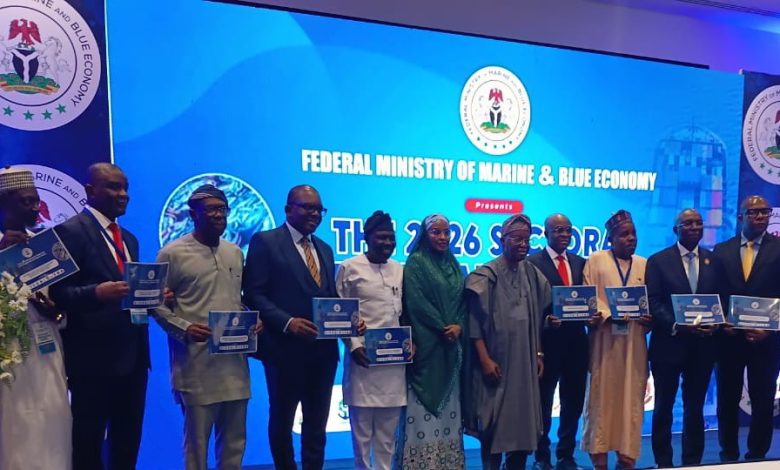
He delivered the warning during the signing of performance bonds with the heads of maritime agencies during the Ministerial Management Retreat held alongside the 2026 first quarter stakeholders’ engagement in Lagos on Thursday, where he stressed the importance of performance-driven governance.
“Let me emphasise that all Departments and Agencies under the Ministry must remain firmly focused on delivering tangible results,” he said.
He also note that performance bonds to be signed during the retreat are binding commitments that will be closely monitored and rigorously evaluated.
“These are not ceremonial documents. They are binding commitments. Accountability will not be optional,” the Minister declared.
Oyetola underscored the need for data-driven decision-making, robust monitoring and evaluation frameworks, and alignment with the Ministry’s strategic objectives.
Futhermore ,After the keynote address by Hon Oyetola,discussions featured pivotal presentations from Mr. Greg Ogbeifun, Chairman/CEO of Starzs Investments Group, and Mr Ismail okunola , the delivery manger of the Central Result Delivery Coordination Unit, both of whom stressed that Nigeria’s maritime potential remains the key to diversifying the national economy away from oil dependency.
Mr. Greg Ogbeifun, a veteran of the maritime industry, delivered a compelling argument regarding the financial drain caused by Nigeria’s reliance on foreign-owned vessels. He noted that the lack of an indigenous fleet results in an estimated outflow of $8 million to $9 million daily.
Ogbeifun called for a “National Fleet” a collective of private indigenous companies distinguishing it from the traditional concept of a state-owned “National Carrier.” He challenged the current regulatory “Catch-22” that prevents local shipowners from securing the cargo necessary to finance vessel acquisitions.
“The volume of our imports demands that we should participate in carrying our cargo,” stated Mr. Ogbeifun. “Inaction compounds a structural loss. You cannot go and buy a ship when you don’t know the exact location of the cargo. Is it possible to say, look, these are all the cargoes that Nigerians are eligible to carry by default?”
Representing the CRDCU, Mr Ismail outlined a comprehensive 10-Year Strategic Roadmap (2025–2035). The plan aims to transition Nigeria toward a holistic maritime ecosystem, encompassing fisheries, biotechnology, offshore energy, and marine tourism.
He highlighted that the new ministry is focused on breaking down “silos” between various government agencies including the Navy, Police, and Customs to create a unified, competitive front in global trade.
“The marine and rural ecosystem is made up of fishery aquaculture, maritime trade and transportation, marine tourism, offshore energy, and biotechnology,” said Ismail. “We have five strategic objectives and about 225 strategic policy initiatives. We must work with the government to ensure they collaborate with Nigerian companies, at least in the area of manpower utilization in those fields.”
The presentations also addressed the hostile fiscal environment facing local shipbuilders. Under current policies, foreign competitors often enjoy more favorable tax and duty terms than domestic operators. Both speakers agreed that for the 10-year roadmap to succeed, Nigerian companies must be empowered by policy shifts that level the playing field against international giants.